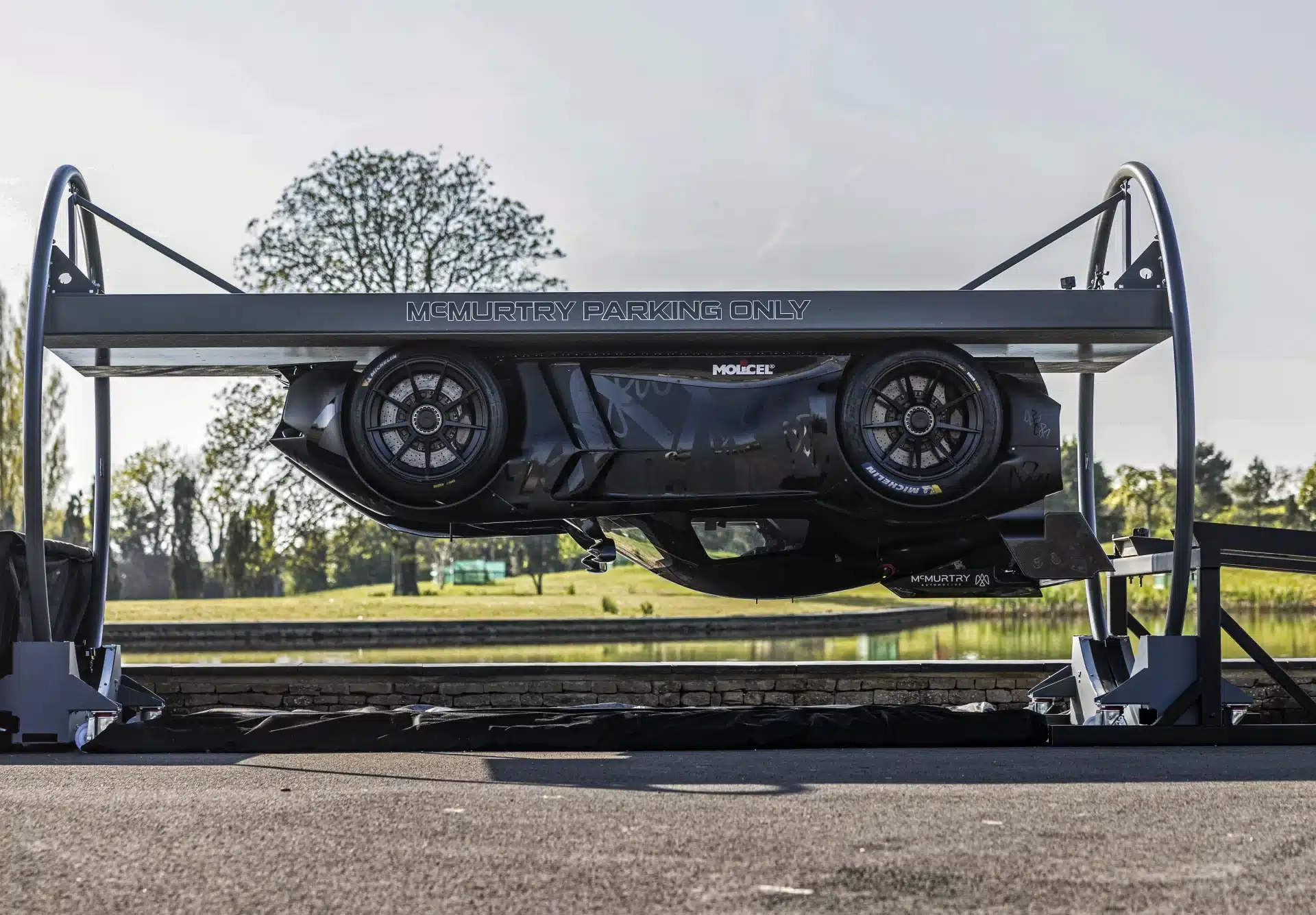
Under the body of this electric hypercar, the McMurtry Spéirling Pure, two fans spin, at very high speed, faster than my boxes when the dog eats my sofa, enclosed in a channel that runs along the entire floor of the car.
How do they work, you ask? Well, a bit like a very powerful vacuum cleaner, the kind used on construction sites to clean the pavement after pouring concrete: they suck air from under the car, at full speed, and push it out, backward, relentlessly. This way, the car manages to literally "glue" itself to the asphalt. Even upside down, if necessary.
How this electric hypercar was born
The prototype had already demonstrated this last year, becoming the first car in the world to drive upside down. Now McMurtry Automotive, an English company founded in 2016 by the engineer Sir David McMurtry, brings that same technology to the production version: it's called Spéirling Pure, and it's an electric single-seater designed only for the track.
The system is called Downforce-on-Demand and uses two fans capable of spinning up to 23.000 rpm, along with an extended aerodynamic "skirt" that seals the underbody. The downforce generated reaches 2.000 kg, more than the weight of the car itself, available even at zero speed. When cornering and braking, the driver can withstand up to 3gThese are numbers from a military fighter, but on four wheels!
What changes compared to the prototype
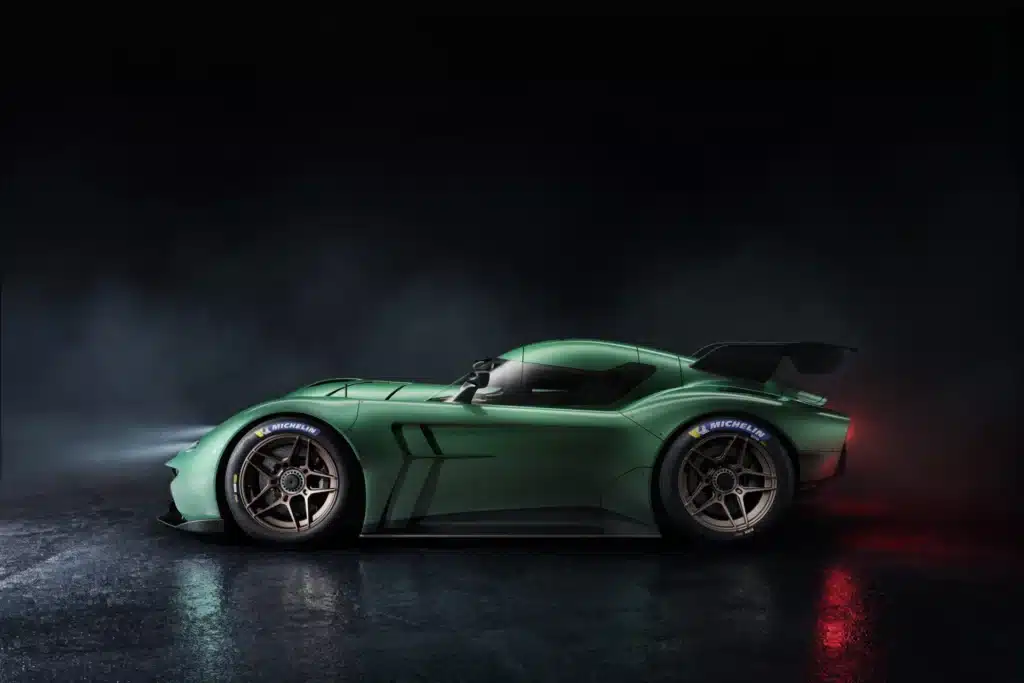
Compared to the prototype, the Spéirling Pure has changed quite a bit: it has new fan blades for longer life, improved and better-cooled fan motors, and an on-board air compressor that allows the driver to retract the skirt independently, especially useful when loading the car onto a trailer for transport.
The battery grows from 60 to 100 kWh, the wheelbase is extended by 20 centimetres and the overall length increases to almost 3,82 metres (still less than a Mazda MX-5, which I use as a term of comparison to pay homage to my friend Giovanni Casella, the greatest car expert I know).
All that extra battery weighs: the Spéirling Pure weighs about 300 kg more than the prototype. Nothing is free, not even physics. In exchange, On-track autonomy reaches 40-50 km at LMP2 pace, with recharges from 20 to 95% taking 20 to 60 minutes depending on temperature and charging station: an eternity when compared to the opposite philosophy of cars like the Lightyear One, designed to recharge itself with the sun instead of at a charging station.
Powering the car are two electric motors on the rear wheels, generating a total of 986 horsepower: enough for a 0-100 km/h sprint in 1,55 seconds. The company says 95% of the components are completely new compared to the prototype: adding a few extra comforts wasn't enough; the car needed to be redesigned to be driven autonomously by a single driver and a single pit crew, without an entire Formula 1 team.
Setup and maintenance, designed for the real track
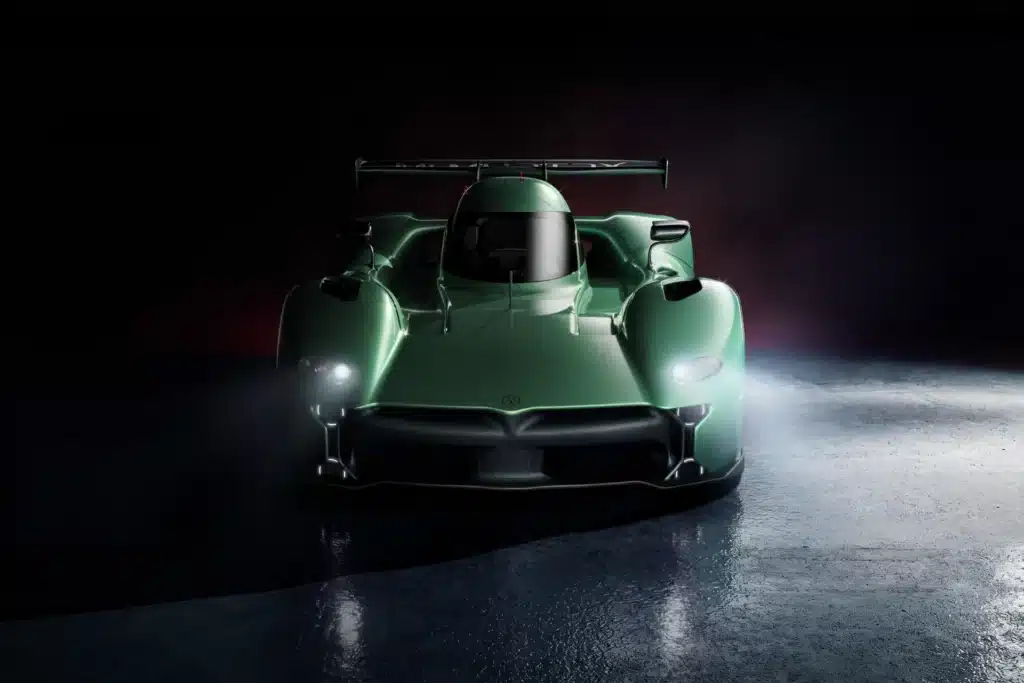
The carbon fiber monocoque has been revised to allow for more suspension travel, the steering is now hydraulic with F1-style valves for a lighter feel, and the shock absorbers are electronically adjustable.
The ride height has increased by about 20%, the Michelin tires are wider, and there are access panels specifically designed to make maintenance easier: a detail that those who actually work on these cars, in the workshop, appreciate more than any extra horsepower.
Where can it be seen, and who can buy it? Anyone interested in racing it can enter it in events like the GT1 Sports Club, the Global Time Attack in the United States, and the Time Attack Masters in Europe. Those who simply want to look at it will find it on display at the Goodwood Festival of Speed. It's best to park it stationary, given the circumstances.
When it actually arrives in someone's garage
Estimated horizonDeliveries have already begun, with the first units arriving in 2026-2027. One hundred will be built, one by one, in a new workshop in the Cotswolds. Price: £995.000 plus taxes, approximately $1,3 million.
Even the price, as you can see, is like a hypercar. With that amount of money you can buy two. Ferrari Luce and a box to store them… Keep them. Some things are priceless: McMurtry, on the other hand, if they push it to the limit, proves that even gravity is negotiable.