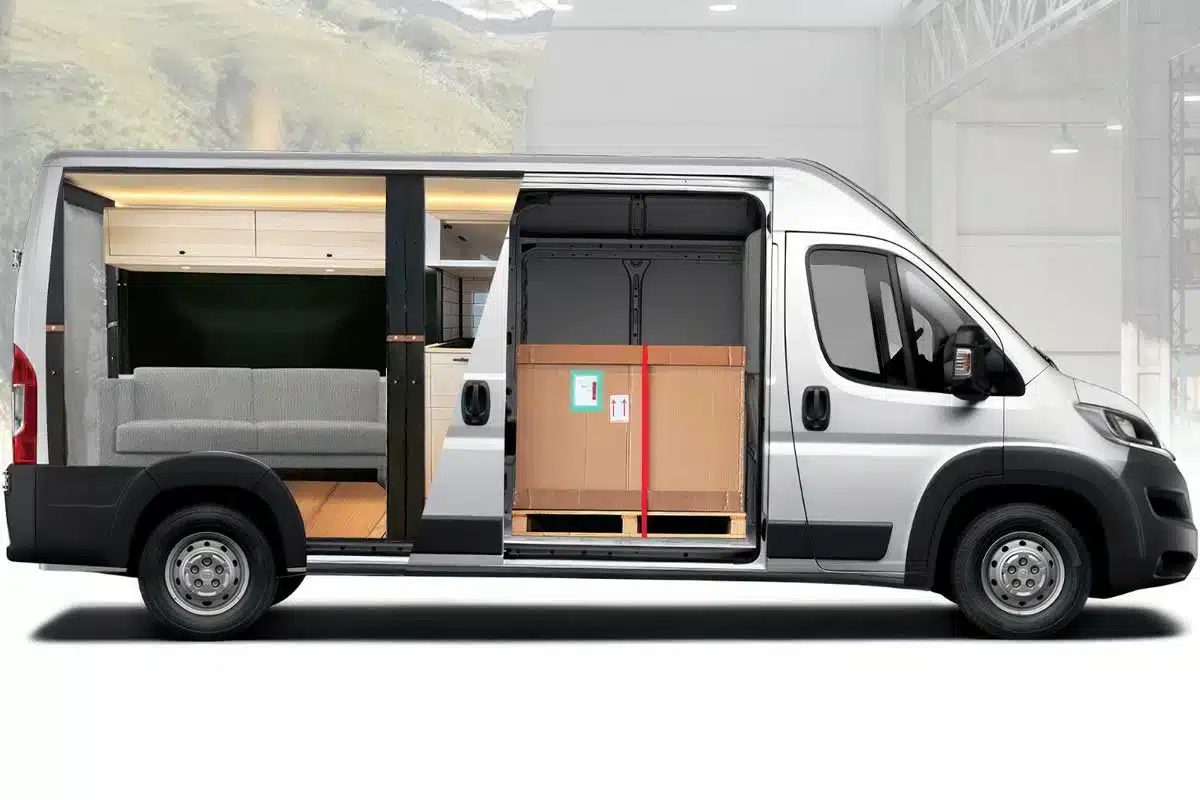
Milan, January 2026. Marco closes the lease on the two-room apartment in the Loreto area: €950 per month for 45 square meters. He bought a used Fiat Ducato L3 (€18.000, Euro 6 diesel) and a camper kit S-MOOVE €3.800 complete. “I assembled the bed, kitchen, and toilet in two hours. I've been working remotely for three months, sleeping in campsites or recreational areas. Fixed monthly cost: €200 for fuel and pitches.” He's not the only one. In Italian vanlife communities, 50.000 people share contact information, regulatory tips, and windshield sunset photos. Modular camper kits are no longer a hipster fad, ladies and gentlemen.
Why now: rents versus freedom
The calculation is brutal. Average rent in Italian cities 2026: between €600 and €1.200 per month. Multiplied by twelve months, that's €7.200-€14.400 per year. In three years, between €21.600 and €43.200 burned without building anything. A recent used Ducato costs €15.000-€22.000. camper kit Modular between €2.500 (basic Combeing) and €5.000 (complete S-MOOVE with hydraulics). One-time total: €20.000-€27.000. After two years, you're broke even. After three, you've saved money.
But it's not just math. It's structural remote work: 3,6 million Italians work remotely According to the Smart Working Observatory at the Polytechnic University of Milan, if your office is a laptop, why pay €900 to sleep in Loreto when you can wake up on Lake Garda, work from a campsite with fiber optics, and travel on weekends? Modular camper kits have intercepted this window. And they've thrown it open.

Three Ducato camper kits (and more), one principle
We had already talked about it in June 2025: VanCubic made the concept viral Installation in an hour with sliding modules made of aircraft-grade aluminum. But the market has moved quickly. Today, three systems dominate the Italian market, each with a different philosophy.
S-MOOVE is the camper kit More complete. Italian modular system with zoned floor, wheel arch modules, bed structure, and above all integrated plumbing: 25-liter tanks, smart sink, and optional chemical toilet. Compatible with Ducato L3, Sprinter, and Master. The advantage? Everything can be assembled without tools in minutes, like an industrial Lego set. Transport is classified as "goods" by the Highway Code: no approvals required. Price: from €3.800 for a complete vehicle.
Coming Together Focuses on speed. Assembly takes a claimed 15 minutes, with a three-mode layout: drive mode (fully folded), day mode (retractable table), or night mode (120x190 cm bed). Five-star reviews on Trustpilot from Italian and French users who praise its sturdiness after years of use. Compatible with Ducato H1/H2, it maintains rear visibility. The most affordable: starting from €2.500 for the basic configuration.
Van Cubic It remains the benchmark for progressive modularity. Two independent sliding aluminum modules: one for the kitchen/bathroom (optional toilet), the other for the living/sleeping area. A 120x190 double bed, fold-down tables, and privacy curtains are featured. Strategic advantage: full compatibility with Ducato and Transit models, and affordable expandability (buy modules one at a time). The YouTube video of the installation has over 2,5 million views. Price: from €3.200 for a single module.
The legal trick that changes everything
The key is the removable design. The54 article of the Highway Code defines “motorhome” as a vehicle with equipment permanently fixedMandatory approval, specialized inspection center, process from six to twelve months, cost €3.000-€5.000. camper kit Modular vans circumvent everything: sliding modules on rails, quick-release hydraulic connections, no screws in the body. By law, they're "transportable things." The Ducato remains a commercial van. Insurance costs less. MOT inspections are standard.
But there's a paradox. These vehicles remain vans even under insurance: standard third-party car insurance policies don't cover damage to the interior trim. And what about camper parking areas? Many municipal regulations explicitly exclude "equipped commercial vehicles." The rule is gray. It works as long as no one asks uncomfortable questions.
Sustainability: The Dark Side of Diesel
Sustainable vanlife is an oxymoron when 95% of the base vans are equipped with Euro 6 diesel engines with emissions of 160-180 g/km CO₂. Fiat e-Ducato electric It has been around since 2024 (280 km range), but costs €15.000 more than the combustion engine. With €3.500 camper kitThe total budget soars above €50.000. This is out of reach for those fleeing unaffordable rents. The democratization of access to vanlife still relies on fossil fuels. An uncomfortable compromise that no press release addresses.
And then there's the infrastructure issue. Campsites and areas equipped with electric charging stations account for approximately 12% of the Italian total (data Federcampeggio 2025). Charging an e-Ducato while traveling means planning long stops and losing spontaneity. The freedom promised by vanlife clashes with an electricity grid designed for homes, not nomads.

Learn More
Interested in the vanlife phenomenon? Read also How VanCubic Revolutionized Modular Assembly in One Hour. Or discover the future of electric campers and why sustainability remains a distant promise. To understand the working context behind the boom, learn more. Digital nomadism as the new frontier of remote work.
I camper kit Modular housing doesn't solve the housing crisis. It just circumvents it. They transform a structural problem (out-of-control rents, stagnant wages) into a mobile, individual solution. Marco in Milan chose the second option. Another 49.999 in Italian communities also chose the latter. The question isn't whether it works. It's: how long can an individual solution replace serious housing policies? Meanwhile, VanCubic, S-MOOVE, and Combeing are selling. And used Ducatos are disappearing from dealerships.