
There's a hidden contradiction in middle age: the body demands weight loss, but when you do, the brain protests. A research team has just discovered that weight loss in adulthood, while restoring metabolism, triggers inflammation in the hypothalamus that doesn't exist in young people. Middle-aged and young mice given the same diet: In both, blood sugar levels normalize, but only in the former does the hypothalamus activate with an inflammatory response documented at the molecular and microscopic level. Microglia, the brain's immune cells, become active. For weeks. Then they calm down.
And the fact that this is happening raises a disturbing question: Could weight loss after forty take a toll on your brain?
Middle age: metabolism in order, hypothalamus on fire
The Ben-Gurion University of the Negev He conducted a study on young and middle-aged mice fed a hypercaloric diet to the point of obesity, then subjected to calorie restriction. Metabolic results were identical in both groups. Blood sugar levels returned to normal, weight decreased, and classic parameters improved. So far, everything went according to plan.
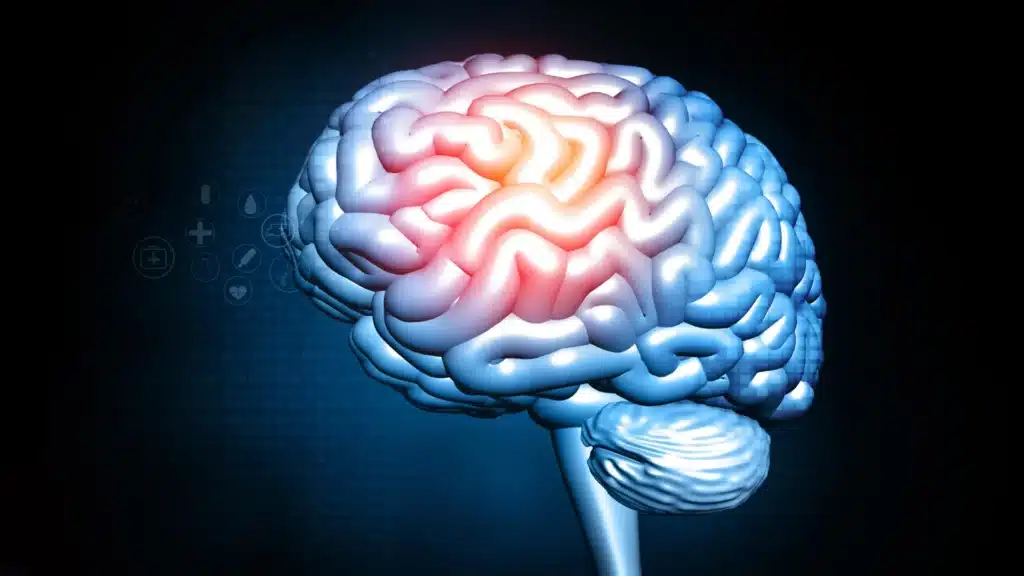
Then the researchers looked at the brainAdvanced imaging, molecular analysis, and high-resolution microscopy were used to observe microglia (the immune sentinels of the central nervous system). In young mice, nothing abnormal was found. In middle-aged mice, however, the hypothalamus becomes inflamedIt's not a temporary flare-up: the inflammatory response lasts for weeks before gradually subsiding. As if the mature brain needed time to accept that the body is changing.
Alon Zemer, MD-Ph.D. researcher and first author of the study is more explicit:
"Losing weight in midlife isn't a copy-and-paste of what works in your twenties. Weight loss remains essential to restoring metabolic health in obesity, but we need to understand the impact on the mature brain and ensure that brain health isn't compromised."
What does middle age have to do with inflammation?
The central question is: why does it only happen in mature adults? The most likely hypothesis concerns how the aging brain manages metabolic changes. In middle age, the central nervous system has accumulated years of oxidative stress, microlesions, and exposure to low-grade inflammation. When a drastic change occurs (rapid weight loss, severe calorie restriction), microglia react as if under attack.
In young people, the brain is more plastic, resilient, capable of adapting without triggering excessive immune responses. In middle age, that flexibility declines. The result? Brain inflammation that lasts several weeks in mice before subsiding. The long-term effects? Still unknown. But chronic inflammation in the hypothalamus has never been associated with positive outcomes: memory problems, increased risk of neurodegeneration, possible acceleration of diseases such as Alzheimer's.
Microglia decide it's an emergency
La microglia It's the brain's surveillance system. It monitors, repairs, and eliminates cellular debris. When it senses a problem, it activates. In the case of the Israel University study, weight loss in middle age is interpreted as a danger signal. Microglial cells change morphology, release inflammatory molecules, and enter defense mode.
Alexandra Tsitrina, co-author of the research, thinks about it:
"Our study characterizes the body's adaptive response to weight loss through two complementary dimensions: molecular and structural. This advanced imaging with microscopy and computational analysis allows us to detect sensitive changes with potential health implications."
Translation: They're seeing things they couldn't see before. And what they see isn't reassuring. Of course, inflammation could also be part of the adaptation process necessary to achieve the metabolic benefits. But until we understand whether that response leaves permanent traces, the doubt remains.
Study Sheet
- Research organization: Ben-Gurion University of the Negev (Israel)
- Principal Investigators: Alon Zemer (MD-Ph.D.), Dr. Alexandra Tsitrina
- Year: 2024-2025
- Magazine: GeroScience
- Title and link: “Weight loss aggravates obesity-induced hypothalamic inflammation in mid-aged mice”
- finance: BGU internal grant (Ilse Katz Institute), US-Israel Binational Science Foundation (2021083), Israel Science Foundation (194/24)
- TRL: 2-3 – Basic research on animal models, far from direct clinical application
So, what do I do? I'm middle-aged. Do I stop losing weight?
No, not at all! It would be worse. Obesity in middle age brings with it diabetes, cardiovascular disease, and irreversible metabolic damage. Losing weight remains essential. The point is another: we need to understand including do it without sending your brain into defense mode.
The Israeli study doesn't provide protocols, but it opens a new avenue for research. Perhaps the speed of weight loss matters. Perhaps neuroprotective supplements are needed. Perhaps intermittent fasting, which alternates phases of restriction and recovery, could reduce brain stress compared to prolonged low-calorie diets. Maybe. For now, these are just hypotheses. What is certain is that in middle age the body and the brain no longer speak the same language.
An interesting detail emerged from the research: inflammation in the hypothalamus spontaneously reduces after a few weeks. This suggests that the brain, even in middle age, retains its ability to adapt. It just takes longer. And in the meantime, that inflammatory window could leave its mark. Or not. No one knows yet.
Learn More
Are you interested in how brain aging affects metabolic responses? Futuro Prossimo we have explored the link between obesity and cognitive decline, exploring how changes in the body directly impact long-term brain health.
When and how will our lives change?
This discovery won't change weight loss recommendations tomorrow morning. But it could, within 5-10 years, lead to age-specific weight loss protocols. Diets designed to minimize brain inflammation in midlife, standard neuroprotective supplements, and cognitive monitoring during calorie restriction phases.
Weight loss will remain essential, but it will become more sophisticated. Personalized not only to your metabolism, but also to your brain.
The next step? Understanding whether this temporary inflammation has functional consequences. Cognitive tests on mice, measuring spatial memory, and assessing synaptic plasticity. If it turns out that weight loss in middle age even temporarily impairs cognitive function, the picture becomes even more complicated.
For now, the message is clear: losing weight remains necessary. But in middle age, the brain is no longer a neutral observer. It participates, reacts, and gets fired up. And asking your metabolism to improve while your brain protests might not be the most elegant strategy.
The scale drops. Blood sugar returns to normal. The hypothalamus, meanwhile, activates its microglia and waits for the situation to pass. Happens.


