A butterfly weighs less than a gram, lives on average a few weeks, and spends most of its existence disguised as a caterpillar. Yet it has lent its blue to screen designers and its name to a chaos theory.
Anyone who searches for "butterfly" online almost always wants a straight answer: how long it lives, what its name is before becoming a butterfly, why it landed on their shoulder. They'll find them below, one question at a time. Those who are patient can even get to the less academic part, where labs and engineers copy from her things they don't yet know how to do.
How long does a butterfly live?
An adult butterfly typically lives from one to four weeks, long enough to search for nectar, a mate, and the right plant to lay its eggs. The myth of the one-day butterfly comes from mayflies, insects unrelated to butterflies and whose adult lives are truly mere hours.
The record holders are elsewhere. The Monarch, the one that crosses North America up to the forests of Mexico, reaches eight or nine months in its migratory generation. The Cedronella (Gonepteryx rhamni), the lemon yellow butterfly which in Italy can be seen already in February on warm days, spends the winter as an adult among the ivy and bushes and can live for more than ten months.
The calculation changes if we include the entire cycle, from egg to chrysalis. A native species takes up most of the year, and certain arctic butterflies take two years to develop wings.
What category does the butterfly belong to and what is its name in Latin?
The butterfly is an insect of the order Lepidoptera (lepidoptera, from the Greek "scale wings"). Around 160.000 species are known in the world, including moths, and butterflies represent a minority: around 18.000. In Italy there are just under three hundred butterflies.
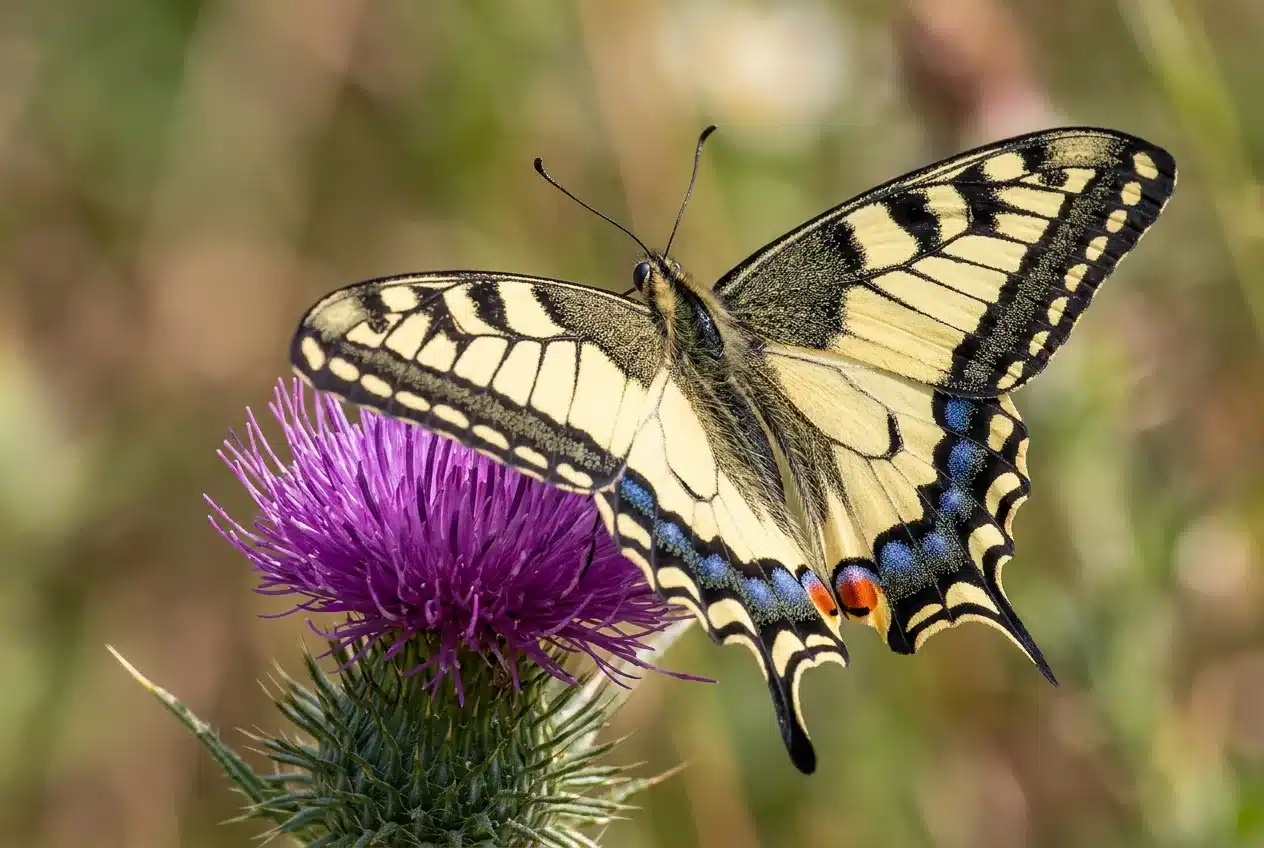
There is no single scientific name for "the butterfly," because each species has its own, made up of genus and species. lepidoptera It indicates the entire order and is of little use if you're looking for a single animal. Some examples, with common Italian names:
| Common name | Scientific name | Family |
|---|---|---|
| Swallowtail | papilio machaon | Papilionidae |
| Cabbage white | Pieris cabbage | Pieridae |
| Lemon balm | Gonepteryx rhamni | Pieridae |
| Vanessa of the thistle | vanessa cardui | Nymphalidae |
| Peacock eye | Aglais io | Nymphalidae |
| Monarca | danaus plexippus | Nymphalidae |
| Blue morpho | Morpho menelaus | Nymphalidae |
| Queen Alexandra's Ornithoptera | Ornithoptera alexandrae | Papilionidae |
What is the difference between a butterfly and a moth?
The antennae are the first clue: in butterflies, they end in a small club, in moths they are thread-like or comb-like, often feathery in males. The resting posture also matters, because butterflies usually fold their wings straight over their backs, while moths keep them spread out or roof-like.
Exceptions ruin the rule. The hummingbird sphinx (Macroglossum stellatarum) is a moth that flies during the day, buzzes in front of flowers, and is often mistaken for a bird. Butterflies, in reality, are a group that grew within the larger moth group, and the distinction is more useful to us than to systematics.
What is the name of a butterfly before it is a butterfly?
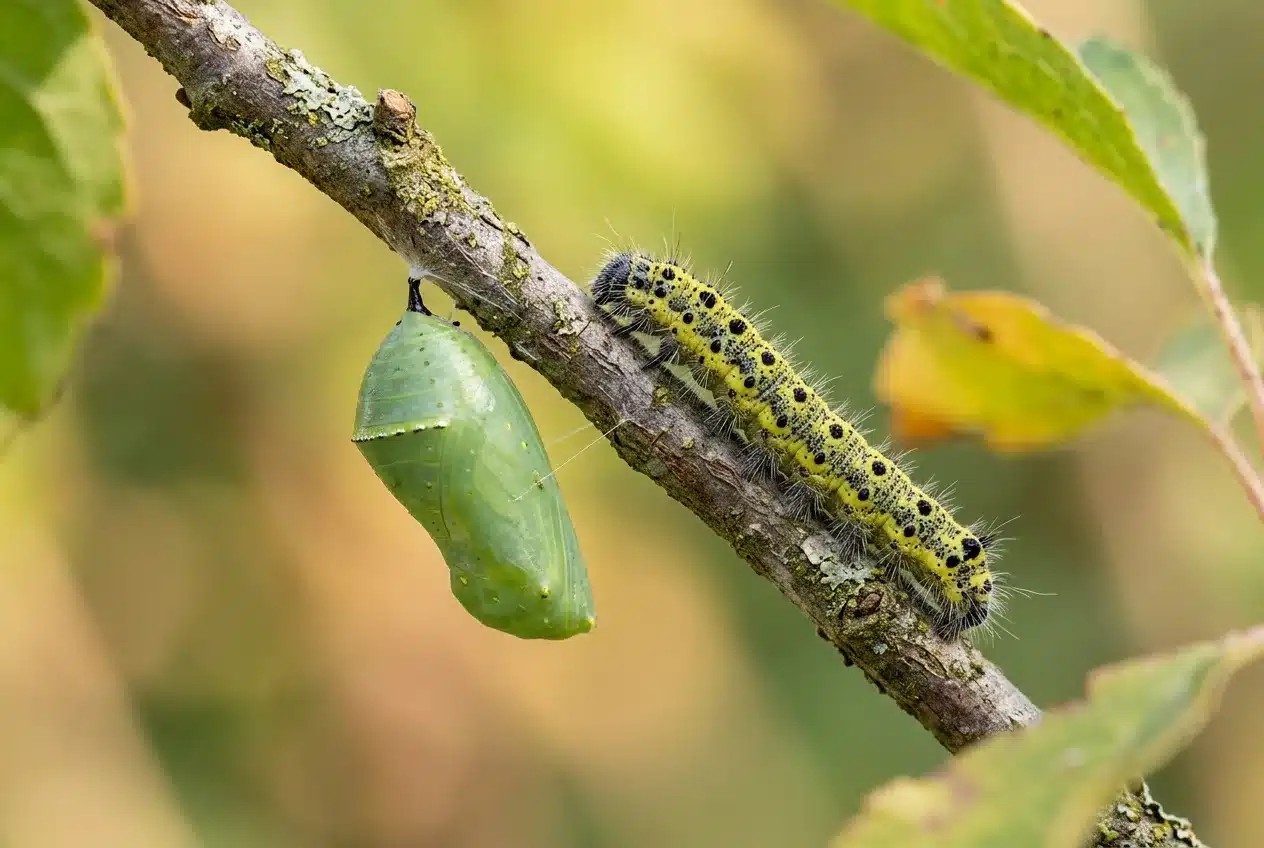
It's called a caterpillar, or larva, and it's the stage in which the animal eats and grows. The life cycle has four stages: egg, caterpillar, chrysalis, and adulthood. The chrysalis, technically called a pupa, belongs to butterflies, while moths often wrap themselves in a silk cocoon.
When a butterfly emerges from its chrysalis, an event entomologists call eclosion, its wings are moist and folded. It inflates them by pumping fluid into the veins and remains still for a couple of hours to dry. That's the worst time to handle it.
What happens inside the chrysalis?
Inside the casing, the caterpillar ceases to be a caterpillar. Much of its tissue is broken down by enzymes, and groups of cells left behind from the egg, the imaginal discs, use that material to build the adult's eyes, wings, antennae, and legs. The process takes from a few days to several months, depending on the species and the season.
The part that interests researchers is another: what survives. In 2008 an American group trained larvae of Manduca sixth, a moth, to avoid a smell associated with an electric shock, and some of the adults still remembered the lesson. Those who work on tissue regeneration and the relationship between brain and memory read these studies with a certain appetite.
How do butterflies reproduce and how do you recognize a male?
Courtship involves scent and flight. Many males release pheromones from glands on their wings; others patrol a patch of grass or wait on a perch for a female to pass by. Mating lasts from a few minutes to several hours.
The female then does botanist work. She has taste receptors on her legs, she taps on the leaf, tastes it, and lays her egg only if the plant is the right one, because the caterpillar that hatches won't have much room to move and must eat it or nothing.
Recognizing the male depends on the species. In the Aurora (Anthocharis cardamines) The clue is obvious: the tips of the forewings are orange only in the male. In other species, it's worth looking at the size, because the female is usually larger and has a fuller abdomen. The male butterfly doesn't have a specific name: it's simply called male.
How many eyes, wings, legs, and hearts does a butterfly have?
- Eyes: two, but compound, each formed by thousands of optical units called ommatidia.
- But: four, in two pairs, covered with microscopic scales.
- Legs: six, although in some families, such as the Nymphalidae, the anterior ones are reduced and the butterfly walks on four.
- Heart: one, a tubular vessel along the back that pushes hemolymph toward the head.
The dust that remains on the fingers of those who touch a butterfly is made of scales, and later we discover why they are so valuable.
How does it see, how does it eat and why does it land on us?
A butterfly's vision extends into the ultraviolet, and many flowers have patterns visible only in that range, like landing strips. To feed, it uses its proboscis, a coiled tongue that extends into the flower like a straw. It tastes with its legs, which is why it lands on things before deciding whether to make them its meal.
If it lands on you, it almost always seeks mineral salts. Sweat and skin contain them, especially sodium, and butterflies need them more than nectar provides. This behavior is called "mineral salts" in English. puddling and it mainly concerns males, who in some species pass sodium to the female together with the spermatophore, a sort of wedding gift.
The rest is tradition, and there is a lot of it. In ancient Greek the same word, psyche, signified the soul and the butterfly, and hence the idea that a butterfly brings news of the deceased or good wishes. When one enters a house, it's usually attracted by the light or warmth and is looking for a way out: the most useful thing to do is open the window.
Where do they live, where do they sleep, and when do they see each other?
They live wherever there are flowers for the adults and plants for the caterpillars, including meadows, sparse woodlands, field edges, gardens, and embankments. They are absent only in Antarctica. In Italy, the season runs from March to October, peaking between May and September, and some species overwinter as adults and emerge with the first warm days.
At night, butterflies stop. They hang under a leaf or bush, their wings closed and their bodies still, waiting for the sun to warm them. There's no place to die: after laying their eggs, they die like all insects, from cold, hunger, or predators.
Which is the most beautiful butterfly and which is the rarest?
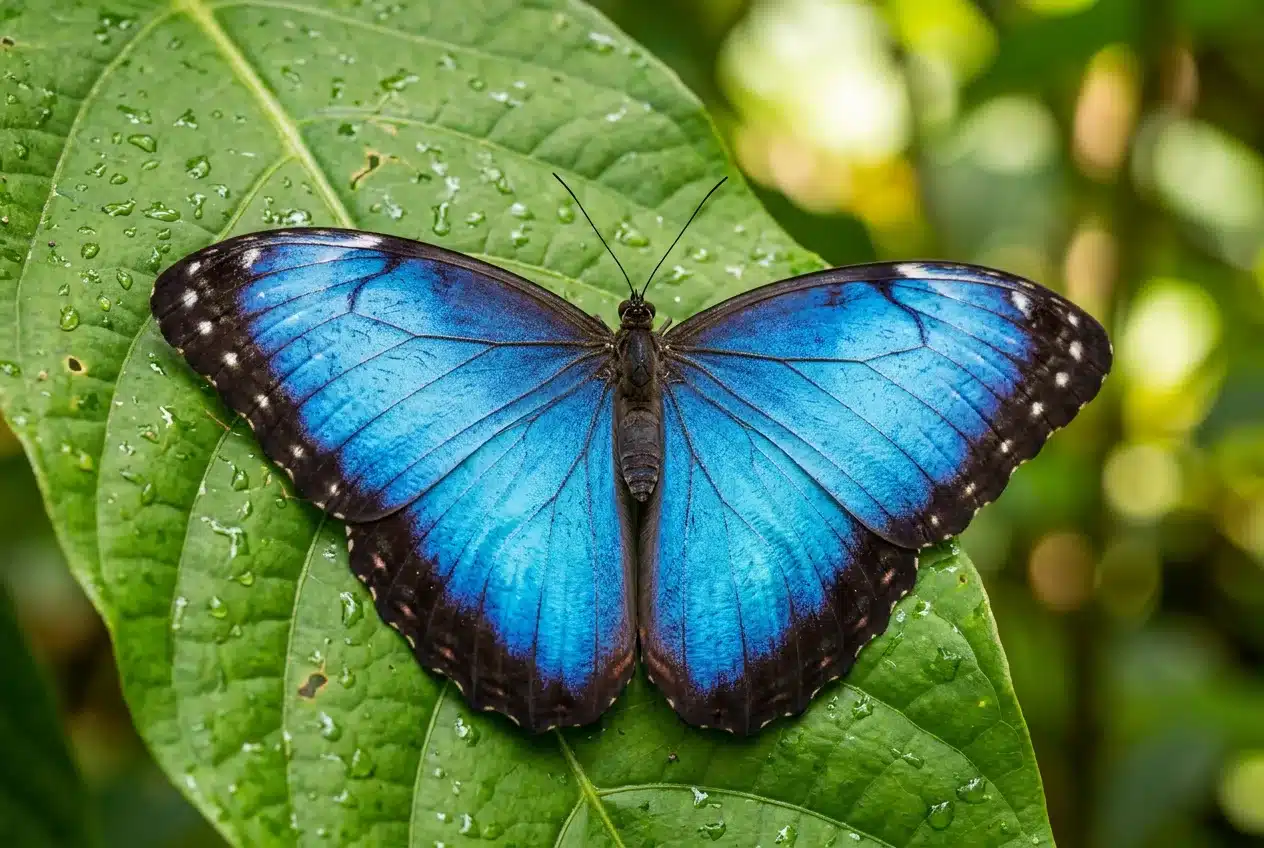
There's no arguing about their beauty, but a few candidates deserve the top spot. The South American Blue Morpho has a color that seems to glow from within, and the Swallowtail, with its tails on its hind wings, dominates European meadows.
The rarest depends on the list you consult. A strong candidate is theOrnithoptera alexandrae, the world's largest butterfly, with a wingspan that can exceed twenty-five centimeters. It lives only in a small forest area of Papua New Guinea and is protected by international conventions.
The blue that doesn't exist
The Morpho's blue color holds a surprise: its wings contain no blue pigment. The scales have overlapping ridges, a few hundred nanometers thick, which reflect light so as to enhance only that wavelength. This is called structural color, and it works like soap bubbles and peacock feathers, changing with the angle from which you look.
For an industry that relies on dyes that are expensive to produce and dispose of, it's tempting. The Japanese company Teijin has launched a structural dye fabric called Morphotex, and Qualcomm has brought to market Mirasol displays, which reflect ambient light like wings and consume very little power. Neither has changed the market, but the principle works, and research into pigment-free paints continues.
The flight that engineers can't quite copy
Butterflies fly poorly, at least by an engineer's standards: slow heartbeat, zigzagging trajectories, and enormous wings relative to their bodies. This erratic flight serves partly to escape predators. The German automation company Festo has built eMotionButterflies, robotic butterflies weighing about 30 grams that fly in groups around a room, coordinated by a camera system.
The problem lies in scale. Below a certain size, air behaves like something more viscous, and wing-flapping microdrones remain an open problem. This is why insects, including butterflies, remain a serious testbed for those designing tiny robots.
What are butterflies for, and why are there fewer of them?
They pollinate, though less well than bees, and provide food for birds, spiders, and wasps. They serve primarily as thermometers: they react quickly to changes in temperature and land use, and in Europe they have been counted for decades along fixed routes traveled by volunteers and professionals.
The numbers are not encouraging. According to the European Meadow Butterfly Indicator, Updated 2023 by Butterfly Conservation EuropeSince 1990, abundance has declined by 32 percent in the EU countries and by 36 percent in Europe as a whole. The main causes are intensive agriculture in the lowlands and the abandonment of mountain pastures, especially in southern Europe.
Artificial intelligence's contribution so far lies in better counting: automatic species recognition from photos uploaded by citizens, camera traps, and models that cross-reference data with climate maps. Fieldwork, using a net and notebook, continues to be useful.
The Butterfly Effect: Where It Really Comes From
In 1961, meteorologist Edward Lorenz restarted a computer simulation starting with a rounded value, 0,506 instead of 0,506127, and obtained a completely different weather evolution than the previous one. From that result, chaos theory was born. The butterfly appeared later, in 1972, in the title of a conference paper: Can the flap of a butterfly's wings in Brazil trigger a tornado in Texas? The title, it is said, was suggested by a colleague.
No butterfly has ever produced a tornado. The issue concerns sensitivity to initial conditions, a limitation that weather models, including neural networks, still struggle with today.
A gram of complexity
The paradox lies in the calculation. We're studying a creature weighing less than a gram with laboratory instruments to learn how to do things we don't yet know how to do, like pigmentless blue and memory that endures the dissolution of the body, while the meadows where it lives shrink. She's given us the blueprint, and in the meantime, we're shrinking the construction site.
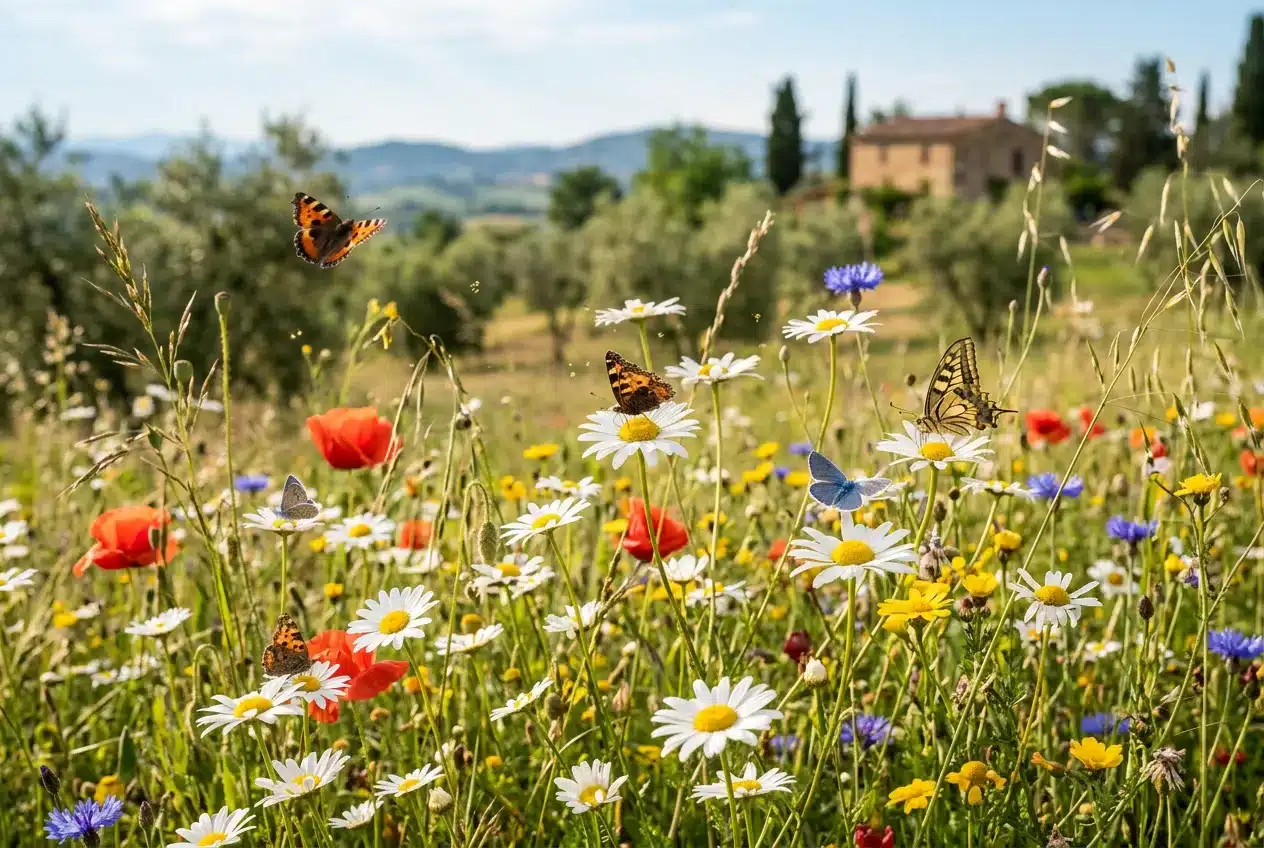
To reverse the trend on a small scale, it doesn't take much: a lawn left to grow until the end of summer hosts more butterflies than one mowed on a weekly basis.