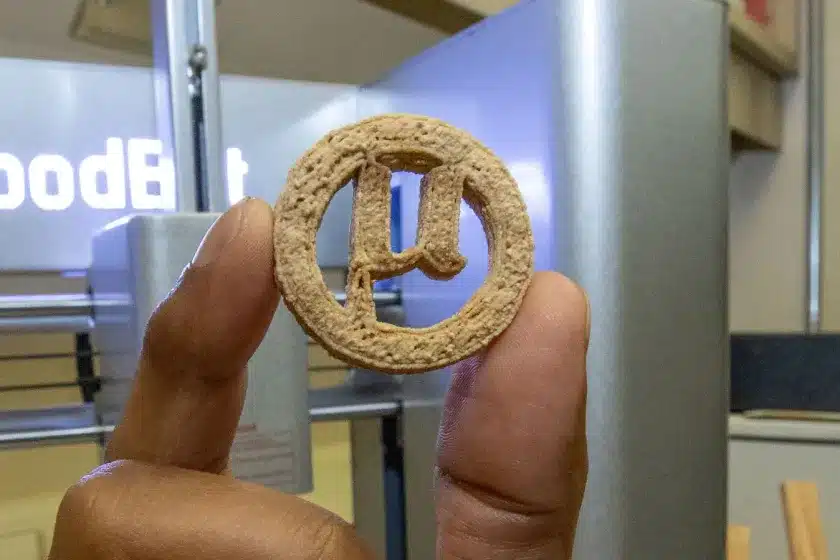
A plastic bottle bought at the supermarket, the kind you throw in the yellow bag without thinking, ends up in a reactor that breaks it down with heat. At the other end of the process, a few days later, comes out a vanilla cookie made literally with that same plastic, passed through a yeast reprogrammed with CRISPR which digests it and transforms it into proteins, fats, and flavorings. And enjoy your meal! The project comes from Southern Illinois University CarbondaleThey called him μBites (pronounced “microbites”), a name that already sounds (a little sinisterly) like an organic supermarket brand.
The process, in brief: used bottles and vegetable waste (corn stalks and leaves discarded from the fields) go through a treatment called oxidative hydrothermal dissolution, which uses heat to break them down into microbial-digestible components. These components are then fed to a genetically modified yeast, which converts them into proteins, fats, acids, flavorings like vanilla, and beta-carotene, the precursor to vitamin A. Fiber, starch, and sweetener complete the dough, which is then extruded into the desired shape using a 3D printer.
Sandhya Jayasekara, who leads the team, speaks about it with a purely… how shall I say, olfactory enthusiasm.
“I think it has a pleasant, inviting aroma. And I think it will taste good, too. We haven't tasted it yet, but it smells good, that's for sure: like a real cookie.”
The research was presented at the autumn meeting of theAmerican Chemical Society in Chicago: the team is still waiting for institutional approval before officially launching their experiment.
What's the point if no one will actually eat it?
Excuse the question, gentlemen: Why build such an elaborate process, if not even the inventors have tried it and the world produces 400 million tons of plastic every year? Secondo Lahiru Jayakody, co-author of the paper, the answer isn't in the cookie itself. It will take twenty years before it's truly possible to take plastic from oceans and landfills and turn it into safe food on a full scale. What matters now is the proof of principle, a microbe capable of digesting waste and returning something edible. It's not a shelf product, it's a prototype method, and methods have a nasty habit of outliving their first, embarrassing attempts. Luckily, I might add.
There is also who, how Jason Hallett of Imperial College London, doesn't share the optimism: he calls the research "fun and interesting," but also, in all likelihood, "a practical dead end." The objection is arithmetic, not ideological. It's impossible to convert 400 million tons of plastic a year into biscuits, and virgin plastic still costs less than any bio-industrial-scale alternative. For him, the only option remains traditional recycling, hampered not by technology but by collection logistics and the excessively low price of new plastic.

Then there is an obstacle that no laboratory can solve with chemistry: perception.
Concern about microplastics in our blood it's already tall on its own. Selling a food literally made of processed plastic requires a leap of faith that marketing alone can hardly cover. Those who worked on it had already tried, with greater public success. edible packaging made from seaweedThere, the starting point wasn't toxic waste but algae, and the difference is noticeable. As for the insect snacks, I'll draw a veil over them. In Europe, it was a complete fiasco: even the keyboard geniuses who accused others of being backward were evidently not enough to keep the business afloat. For now, and at least for me, forgive me, no cricket chips.
Jayakody hopes that the project, even if it remains a conference experiment, will trigger "a social shift" in the way we think about waste: it's a worthy goal, less ambitious than the title suggests. In the meantime, the plastic cookies remain there, locked away in a lab in Illinois, awaiting a signed form before anyone can find out if they smell as vanilla as they promise. As for the flavor, you go ahead: you can let me know later.
How long will it be before we see “plastic” biscuits on the shelves?
I honestly believe not before 20 years if they were to prove themselves confident(?), maybe never on a commercial scale. The first obstacle It's not yeast biology, which has already been demonstrated. It is the regulatory approval of a food born from recycled plastic and genetic engineering together: double obstacle, no agency has yet addressed it. The second obstacle It's cheap: collecting and processing dirty plastic costs more than virgin plastic. Those who get their hands on it first, if it happens, will be university pilot programs or niche applications like supplements and animal feed, certainly not supermarket shelves.


