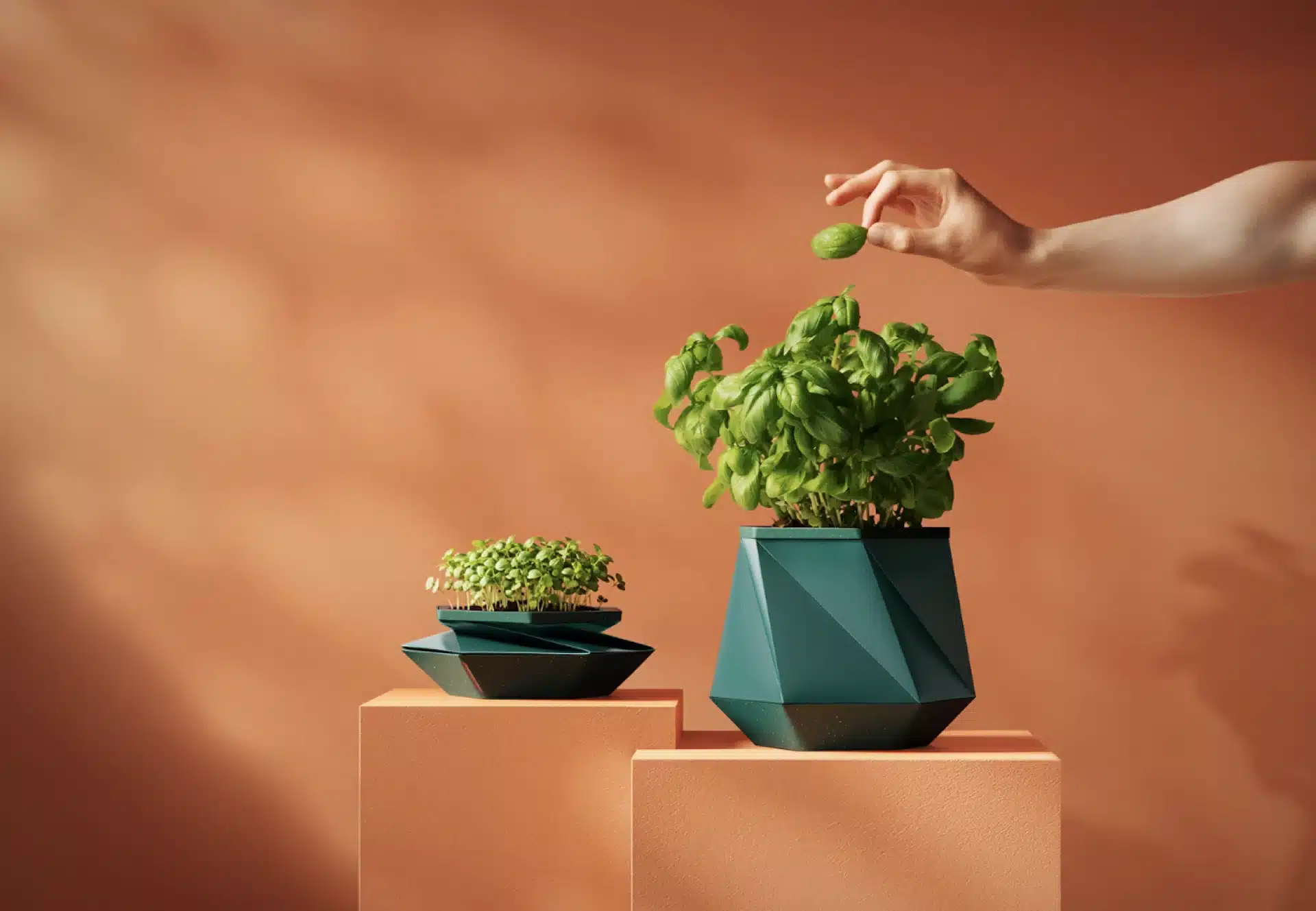
“But why do I have to buy it again? self-watering vase "Every time the plant grows?" It's a question anyone who's killed a fern due to repotting trauma has asked themselves at least once. The gesture seems harmless: you dig up the plant, shake out the old soil, and place it in a larger pot. The roots, however, don't see it that way: they suddenly lose the moisture, microorganisms, and soil structure they'd grown accustomed to, and for weeks the plant stalls, instead of growing.
POTR, a Glasgow-based company founded in 2019 by Andrew Flynn ed Eilidh Cunningham, thinks he has the answer. It's called Helix, has a spiral shape reminiscent of origami (the trademark of the company, which has already sold one hundred thousand of these foldable vases), and has just arrived on Kickstarter with more than 530 backers one month before the end of the campaign.
The idea is simple to say and more complicated to execute: a pot that expands in diameter and depth following the roots, from seed to adult plant, without ever moving. I really like it, I have to say.
How it works (there's something you don't expect)
The self-irrigation system works through a reservoir that releases water only when the soil dries out, which should reduce root rot and damaged leaves. In practice, there's no risk of forgetting to water or overwatering. The material is recycled polypropylene, and the angled shape allows multiple Helix units to be connected together, ideal for those with multiple plants who want to build a small modular system instead of a row of pots scattered around the house.
There is also a double starter kit: a small dish for germinating seeds and one for propagating twigs, designed specifically to accompany the most delicate phase, the one in which a plant risks its survival in the first few weeks, even before ending up in the actual pot.
POTR presented it at the Chelsea Flower Show, where Helix reached the final as Product of the Year: a weighty endorsement, in a market where “smart” gardening often struggles to be taken seriously by purists.
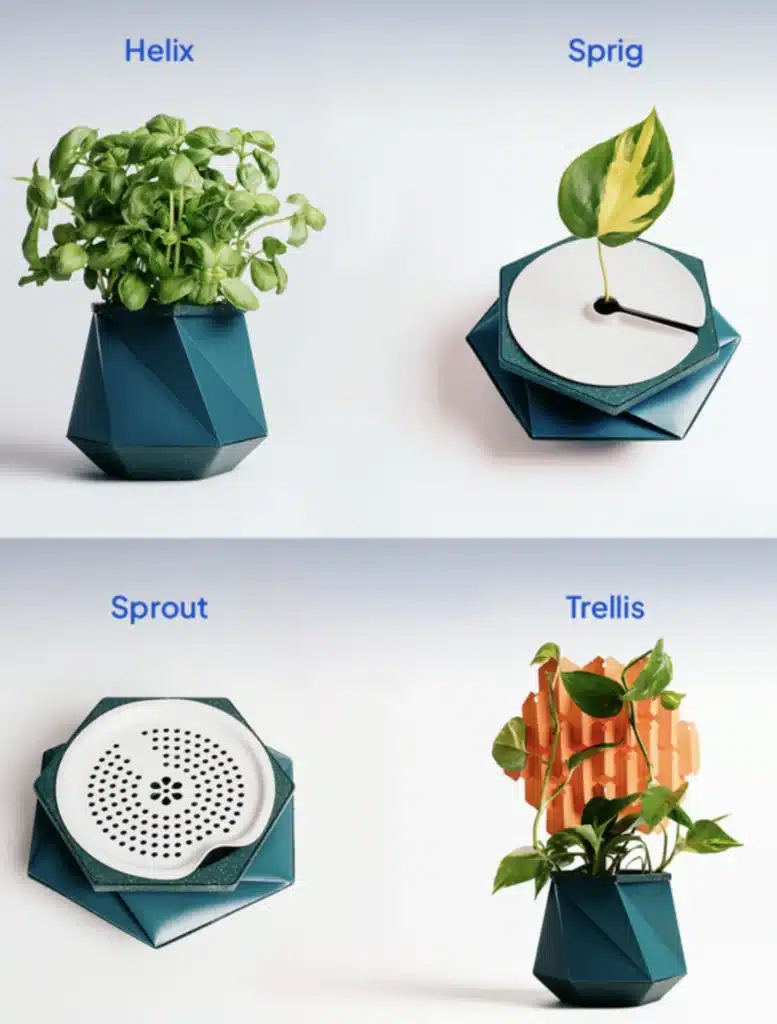
Don't call me mean if I point out one thing: when the pot "expands," it doesn't add soil on its own. Expanding the container without adding substrate leaves the peripheral roots to grow for a while in a space that's more air than soil. Therefore, anyone using Helix effectively will need to top up the soil at each expansion stage. an operation that is very similar… to repotting, only smaller and more frequent.
The paradox of the eternal vase
POTR explicitly calls it a “forever home”: a container designed to never be replaced. It's a value proposition that goes against the grain in a sector like hobby gardening, which thrives on replacement: pots break, fade, and become insufficient as soon as the plant grows a size. Selling a product that promises to eliminate repurchase costs is as interesting a commercial gamble as a botanical one, and it's by no means a given that it will work when it comes to numbers.
But I hope so.
Who's behind Helix?
CompanyPOTR, founded in Glasgow in 2019 by Andrew Flynn and Eilidh Cunningham. Over 100.000 units of the original self-watering origami pot have been sold.
Key data: over 530 backers on Kickstarter, launch price $55 (-45% on expected list price), global shipping expected from September 2026.
We had already intercepted its direction a few months ago, when we were telling biophilic design trends coming to homes in 2026: objects that stop being accessories and become silent infrastructure for the coexistence between people and plants, a bit like furniture designed to fit the space rather than the other way around. Helix is one of those things, arriving earlier than expected and with more ambition than usual, just like the lamps that breathe we were talking about some time ago: technology that disguises itself as furniture.
Because buying something that promises to make you buy less in the future, today, is still a great purchase.


