
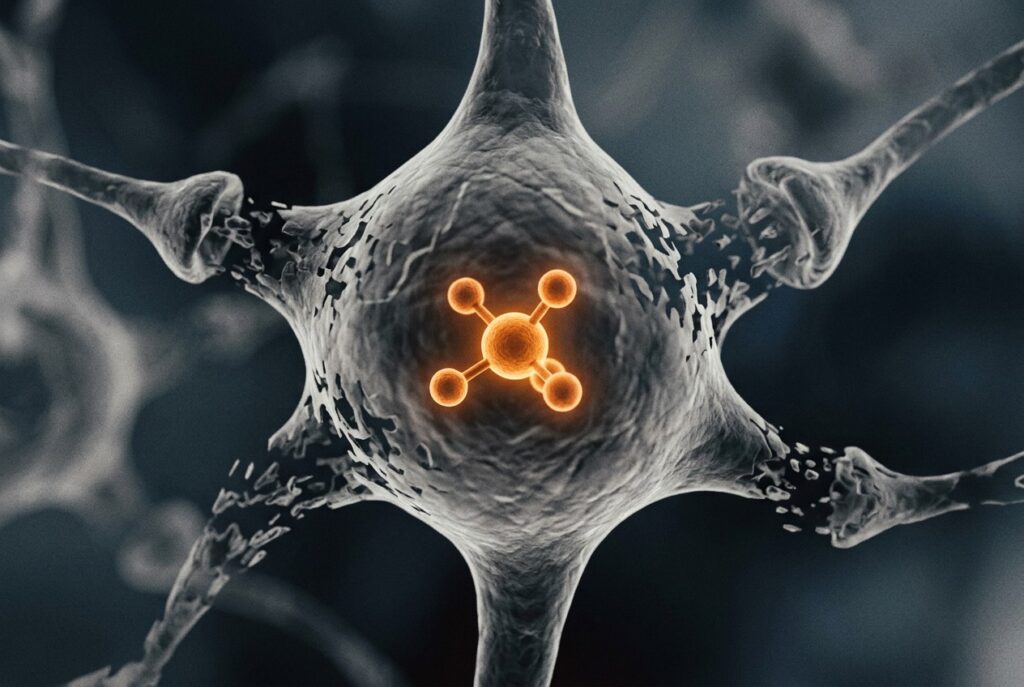
The neuron on the screen has only one arm. It should have dozens, branching out like a tree in spring, yet the cell looks like a pruned branch. The researchers Ucsf they know why: it's full of FTL1, a protein that stores iron. Too much iron. Enough to shut down connections with neighboring neurons and slow down cellular metabolism to the point where it appears to be that of a brain twice its age. The discovery alone was remarkable. What happened next made it a lead.
Brain aging has a name (and a chemical formula)
This story begins in the hippocampus, the region of the brain responsible for memory and learning, which suffers the most damage as the brain ages. The team Saul Villeda, associate director of the Bakar Aging Research Institute At UCSF, he sifted through thousands of genes and proteins in young and old mice. Of all the molecules examined, only one showed significant differences: ferritin light chain 1, or FTL1.
Older mice had more of it. They also had fewer synaptic connections and performed worse on cognitive tests. When researchers artificially increased FTL1 levels in young mice, their brains began to behave like those of older animals. And when they reduced it in older mice, the opposite happened: the connections reappeared, and memory improved. study, published on Nature aging in August 2025, described a real reversal of the decline, not just a slowdown.
Study sheet
Title: Targeting iron-associated protein Ftl1 in the brain of old mice improves age-related cognitive impairment
Authors: Laura Remesal, Juliana Sucharov-Costa, Yuting Wu, Karishma JB Pratt et al.
Institution: University of California San Francisco
Magazine: Nature aging, August 19, 2025
DOI: 10.1038 / s43587-025-00940-z

Iron is not a detail
Now, the interesting thing is that FTL1 is not just any protein: it is part of the system of the ferritin, the complex that regulates iron storage in cells. Until this study, no one had linked it to brain aging. But iron in the brain was not a new topic.
An meta-analysis published in the Annals of the New York Academy of Sciences collected 23 MRI studies on over 1.800 subjects (715 Alzheimer's patients and 1.130 healthy controls): iron accumulation in the basal ganglia was significantly higher in patients, and the levels correlated negatively with cognitive performance. This is the first solid meta-analytic data on iron and Alzheimer's disease.
And there's more. Rare mutations of the FTL1 gene in humans cause neuroferritinopathy, a neurodegenerative disease with motor disorders, dystonia, and progressive cognitive decline. Furthermore, longitudinal studies show that Elevated cerebrospinal fluid ferritin levels predict conversion from mild cognitive impairment to Alzheimer's disease over 7 years. In short: the iron trail is not limited to laboratory mice, there is already a similar and proven path in humans.
Why removing the iron is not enough
You might think the solution is simple: remove the iron, and the problem will be solved. But no. A clinical trial with the Deferiprone (a chelator that crosses the blood-brain barrier) reduced iron levels in the hippocampus of Alzheimer's patients, but did not improve cognition. A paradox that reinforces the significance of the FTL1 discovery: The target is not iron in general, but how a specific protein handles it (poorly) in aging neurons.
The UCSF team also demonstrated something else: by treating neurons with a compound that stimulates metabolism (NADH supplementation), the negative effects of FTL1 were prevented. Brain aging driven by this protein occurs through a slowdown in cellular energy production: mitochondria function less efficiently, ATP synthesis declines, and the neuron progressively "shuts down."
A target, not a cure
Villeda and his team are now exploring whether pharmacological inhibition or gene therapy directed against FTL1 might work in humans. The road from preclinical research to the clinic is long (we're talking years, maybe a decade) but the advantage of having a precise molecular target, compared to generic anti-aging approaches, is enormous.
The brain doesn't wear out like a battery. It rusts, to put it simply. And now we know which part rusts first.
Learn More
The iron pathway in brain aging fits into an increasingly rich research landscape. Futuro Prossimo we have already told the original discovery of the FTL1 protein and the overall picture on Drugs, robots, and cities as weapons against global aging. For those who want to understand the metabolic mechanisms underlying neuronal rejuvenation, it is also worth rereading the piece on neurogenesis at Stanford.


