
In the Pacific, on an island in the Atoll of Enewetak, there is a 115-meter-wide concrete dome. Inside, over 120.000 tons of nuclear waste, including significant amounts of plutonium-239, a material that will remain dangerous for 24.000 years. The dome is called Runit Dome (You can see it in the main photo of this article), but locals call it "the Tomb." Built between 1977 and 1980 as a temporary solution after American nuclear tests, it never received a waterproof base: beneath the concrete is porous coral, and seawater seeps in and out. Now the cracks are visible to the naked eye, the sea level is rising, and about 300 people live 30 km away. Another beautiful legacy of the "good old" nuclear power plant: can we say that, or will it offend some lawyers?
An atomic crater as a nuclear waste dump
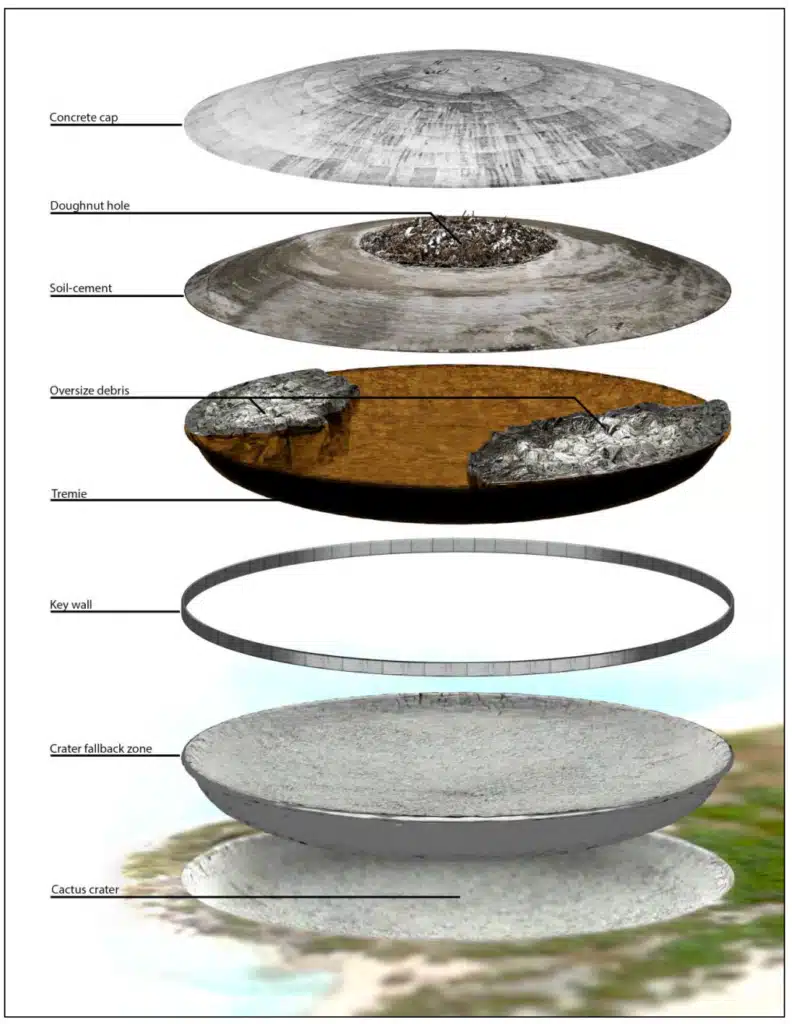
The story begins in 1958, when the United States detonated an 18-kiloton device called Cactus on Runit Island. The explosion vaporized part of the island and left a crater 10 meters deep. Twenty years later, the U.S. military decided that hole was the perfect place to dispose of the radioactive waste of the 67 nuclear tests conducted between Enewetak and Bikini between 1946 and 1958. Some of those tests exceeded the power of Hiroshima by a thousand times.
Approximately 4.000 soldiers worked on the cleanup for three years, collecting contaminated soil from six different islands and dumping it into the crater. The original plan called for an impermeable concrete bottom; this was eliminated. to save money. Finally they covered everything with a 45-centimeter-thick concrete cap. Temporary solution, they said. Yes, we'll sort it out later. It was 1980.
Cracks in the nuclear waste tomb
A report by the Australian ABC published on March 14, 2026, brought attention to the dome's condition. Columbia University Chemistry Ivana Nikolic-Hughes, which studies the residual contamination of Isole Marshall for years, he said he saw the cracks in person in 2018, during a soil sampling campaign. The analyses they found elevated levels of five radionuclides in the soil outside from the dome: It could be evidence that nuclear waste is seeping out, or it could be the result of the chaotic cleanup of the 70s, which also left a lot of material in the lagoon.
The Tomb Numbers: 115 meters in diameter, 45 cm thick concrete, over 120.000 tons of contaminated material. The plutonium-239 it contains has a half-life of 24.000 years. Runit Island sits just 2 meters above sea level. Climate scientists predict a 1-meter rise in the Marshall Islands by 2100.
The fact is this: Even the U.S. Department of Energy admits that cracks are consistent with aging concrete. In 2024The Pacific Northwest National Laboratory conducted a study on the effects of climate change on Runit Dome, concluding that storm surges and gradually rising sea levels pose the primary risk to nuclear waste dispersion on the atoll. Here, the dome is 2 meters above the water. There's no need for apocalyptic scenarios: a slightly more intense storm season than usual is enough.
Who pays the bill (and who never pays it at all)
The United States maintains that it has fulfilled its obligations to the Marshall Islands. The dome is on Marshallese soil. so (according to Washington) the responsibility is theirs. It's a bit like giving someone a suitcase full of plutonium and then complaining that they don't look after it properly. In 2020The U.S. Department of Energy declared that the structure was not in imminent danger of collapse. Nikolic-Hughes responded with a simple question: if the lagoon already contains more radioactive material than the dome (as the U.S. government claims), why build it?
Robert Celestial, a former Army driver who dumped nuclear waste into the crater in 1978 wearing shorts and rubber boots, spent the following decades suffering from skin sores, liver and kidney problems, and osteoporosis. Only in 2023 did the U.S. government recognize Enewetak veterans as "atomic veterans" eligible for disability compensation. Of the 4.000 soldiers who participated in the cleanup, according to the National Association of Atomic Bomb Veterans there are only a few hundred left.

Learn More
Are you interested in nuclear waste and radioactive waste management? Read also How Deep Isolation plans to dispose of waste without bunkers. Or discover The Swedish vault designed to last 100.000 years e Glass ceramics that could change storage.
The UN Special Rapporteur Paula Gaviria Betancur He put it this way, in 2024: nuclear testing and military requisitions have displaced hundreds of Marshallese for generations, and climate change threatens to displace thousands more. The Runit Dome perfectly encapsulates the relationship between those who create a problem and those who inherit it: you cover it with 45 centimeters of concrete, say "enough for now," and turn away.
And many kind things from the Lawyers.


