
Every morning, dozens of founders wake up and check their burn rate. The numbers never lie: three million burned this month, eighteen the previous month. The pitch deck still talks about the "AI revolution," but in the meeting room the atmosphere is that of a wake. Investors' questions have changed. They no longer ask "when will you conquer the world?" but "when will the money run out?" Welcome to 2025, almost 2026: the year the AI bubble stops pretending and begins to burst. But the interesting thing isn't the collapse: it's what's growing under the rubble.
When the numbers stop lying
95% of AI pilot projects fail, according to new MIT study published by NANDA InitiativeA fact that shook Wall Street more than any stock market crash. But the truth is harsher: 99% of AI startups will be dead by 2026. The math is merciless. Most companies funded between 2021 and 2023 had 18-36 months of capital. Many will run out of money by the end of 2025 or early 2026. Meanwhile, AI investments have reached $200 billion according to Goldman Sachs, but returns are practically non-existent.
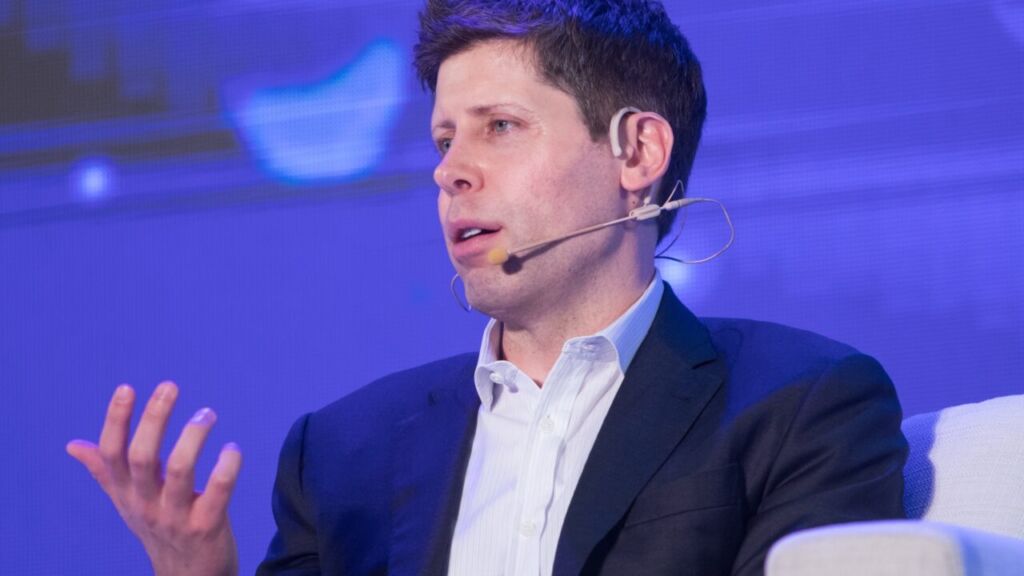
Sam altmanOpenAI CEO, bluntly admitted: “We’re in a phase where investors are potentially overexcited about AI.” When those who should be selling the dream admit it’s all a bluff, the game is over.
The numbers of the disaster: Of 150 million global startups, 90% fail. For AI, the rate rises to 99%. Over 60% of AI tools built by startups have no recurring revenue or monetization paths. The time for playing is over.
The anatomy of a planned failure
Most AI startups aren't companies. They're just containers built around OpenAI APIs that burn money by offering free services in the hopes of converting users who never arrive. It's a bit like opening a restaurant that only serves McDonald's food, hoping people won't notice. The idea works until the money runs out. And they're all ending together, at the same time.
The market is saturated: every niche, from content tools to customer service chatbots, is overcrowded. Differentiation is impossible when everyone uses the same underlying technology. It's as if a thousand pizza makers opened on the same street, all using the same recipe.
But there's a hidden paradox. OpenAI depends on these wrappers for distribution. When they collapse, even the San Francisco giant will feel the pinch. A fragile food chain where everyone depends on everyone else, and no one really makes money.
AI Bubble, the Signals Were All There Already
The European Central Bank had warned, and not aloneThe stock market has become dependent on a handful of AI companies, creating the risk of a price bubble. Goldman Sachs Research estimated investments of $100 billion in the US and $200 billion globally by 2025. Too much money, too much expectation, too little time.
The reality is that generative AI is impressive for demos, but useless for business models. Companies struggle to integrate AI systems into their existing workflows. What seems simple (just giving instructions in natural language) requires expertise and experimentation that few possess.
The inconvenient truth: Even Sam Altman is already aiming beyond current AI, talking about "superintelligence." When the creators of ChatGPT are already looking elsewhere, perhaps it's time to worry.
What grows in the desert after the storm
Want to know the point everyone's missing? Bubbles never destroy anything. They filter through. Like the Internet bubble, many companies will disappear, but the technology will continue to grow and mature. The survivors won't be the "ChatGPT for X" we see today. They will be companies that have understood three things: proprietary data, deep integration into existing workflows, and measurable ROI.
What will emerge from the ashes will not be "more AI." It will be integrated, invisible, distributed intelligence. Systems that promise not to replace humans, but to enhance them in ways we can't even imagine today.
AI Bubble, the Paradox of the End
The most fascinating thing about this bubble is that it's bursting just as AI is really starting to work. Microsoft is developing quantum AI, smart stethoscopes are reaching 96% diagnostic accuracy, and the first concrete data is emerging on the jobs AI can truly transform. But all this is happening far from the hype, in research labs and specialized applications. While startups burn money building chatbots, those who are serious about it are quietly building the future.
2025 won't be remembered as the year AI ends. It will be the year artificial intelligence stopped being a fad and started becoming infrastructure. Like the internet after 2000: less talk, more substance.
The bubble always bursts. But what remains, sometimes, changes the world.


