The standing desk market is exploding, with projections speaking of $12,6 billion by 2032. But are we sure that this solution at home and in the office is really the answer to our sedentary lifestyle problems? A new Australian study of over 83.000 people suggests otherwise, calling into question everything we thought we knew about the healthiness of these standing workstations.
The research that changes everything
The phrase “sitting is the new cigarette” has dominated the health debate for the past decade. A powerful metaphor, it has prompted many of us to seek alternatives to the classic desk. standing desk seemed like the perfect solution: a simple way to combat the sedentary without disrupting your work routine. Still desks, but you stand in front of them, not on a chair. Okay. And how reliable is the evidence to support this theory?
A team of researchers decided to get to the bottom of the matter, conducting a study on an unprecedented scale. Monitoring more than 83.000 participants provided objective data on the real effects of prolonged standing, overcoming the limitations of previous studies (which were essentially based on self-reports).
The results? Surprising: standing for long periods not only It does not improve cardiovascular health, but may actually increase the risk of circulatory problems.
Standing desk and hidden risks
The new study (I link it here) revealed that sitting for more than ten hours a day is actually associated with an increased risk of heart disease and stroke. However, simply replacing it with standing does not solve the problem. On the contrary, prolonged standing can cause blood to pool in the legs, increasing the risk of varicose veins and other circulatory disorders.
Note how this research used tracking devices to collect objective data on the postural habits of participants. An approach that allowed us to overcome the inaccuracies typical of self-assessment questionnaires. Of course, however, the average age of the participants (around 61 years) suggests the need for further studies on different age groups, but the results are still significant for rethinking our approach to sedentary work.
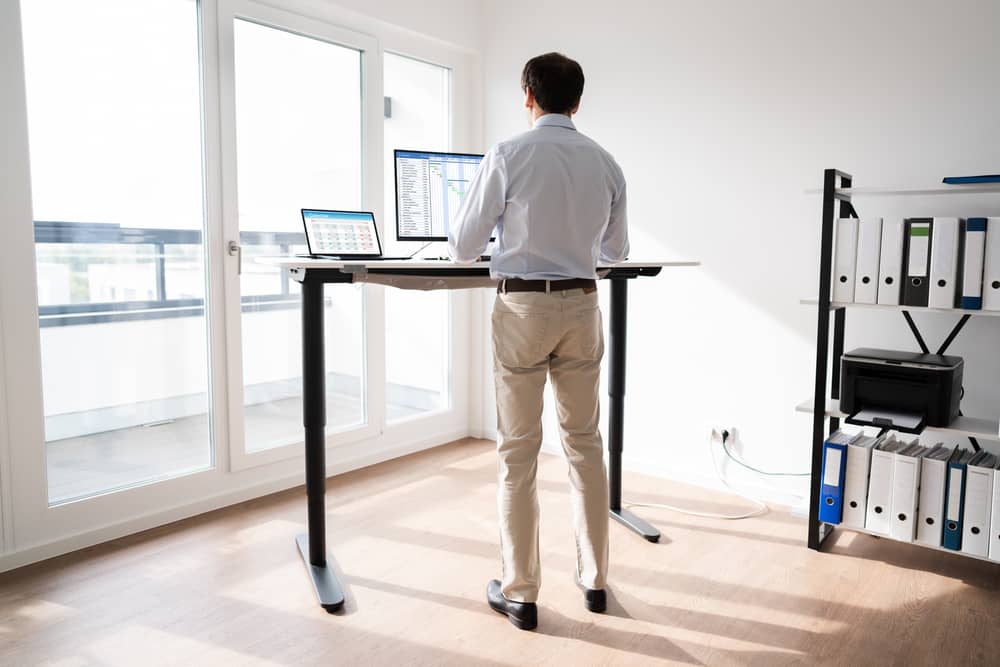
Movement is the key
The real revelation of this research is that our body responds better to smooth movement rather than static positions, whether sitting or standing. The active breaks, even short ones, can break up long periods of inactivity and provide significant health benefits. Workplace interventions that promote movement have shown promise. Researchers found that office workers who reduced sedentary time by alternating periods of standing with light activity showed improvements in blood sugar levels and other health markers.
Le sit-stand desks, designed to facilitate the change of position, could represent a more balanced solution, especially if integrated with reminders for regular movement (excellent for those who, in smart working, doesn't even count on the coffee break with colleagues).
Goodbye standing desk? No way. Towards a new balance
The key is not to completely eliminate a sedentary lifestyle, but to find a dynamic balance. Small daily actions like taking the stairs, walking to a colleague instead of sending an email, or getting up during phone calls can make a difference. I find the idea of setting a timer every 30 minutes to remind us to move particularly useful, helping us break up long periods of immobility, whether standing or sitting. It's a simple but effective way to take care of our health.
The final message is clear: it is not so much whether we stand or sit, but how much we move during the day. standing desk They can be a useful tool, but they are not the definitive solution that many hoped for. In fact, they can be a new problem.


