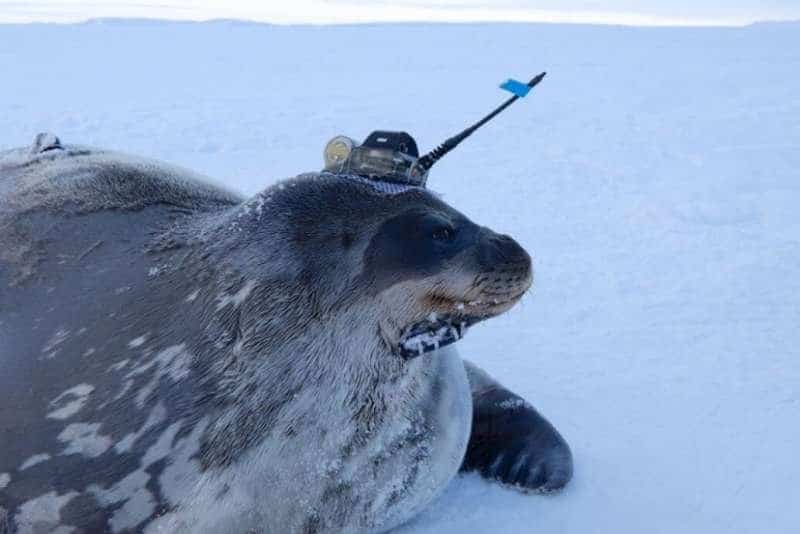
Oceanographers have a hard time finding the right ship to study places that are too cold for boats. This is why a research team came up with a dear, old friend: the seal! The seal is very good at swimming even in the cold.
Without wasting time (and without asking permission, I guess) these talented scientists attached sensors to the seals to study the places. The results were published in the journal Limnology and Oceanography.
Long live the seal, may God bless her (who knows how this will be translated, non-Italian friends)
The continental shelves of Antarctica are one of the most biologically productive parts of the sea, the large amount of sea ice producing many nutrients. And in fact (what do they say? Rich dish, I'll stick to it) the Weddell seal and the emperor penguin are there and are having a great time.
Frequent exchanges of ocean, ice and pack ice water, particularly those between warm, deep and coastal waters, play an important role in organic production in all areas of the continental shelf. To better understand how these dynamics work, however, a lot of data is needed, data that is difficult to collect in such extreme areas.
And who will you call?
For some time now, scientists have started using equipment that records data about the ocean by placing it directly on marine animals. Sensors that tell us how conductive, or salty, the water is, how deep it is and how warm it is. The data collected helps estimate where the water comes from.
“Previous studies using tools related to the migration of the southern elephant seal and Weddell seal, a predator that dives deep, had shown some interesting physical processes in Antarctic areas,” he says Nobuo Kokubun, assistant professor at the Japan National Polar Research Institute and lead author of the study.
Since 2017, researchers have been conducting field studies by attaching (with glue) sensors to the heads of Weddell seals from March to September. Non-light contraptions: They weighed about half a kilo and were the size of a small Rubik's cube.
A seal as a friend
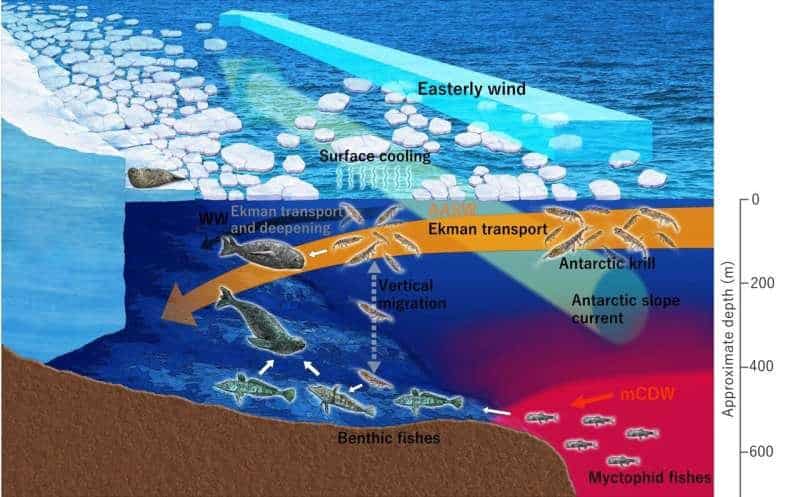
Using data transmitted by the seals, the researchers have so far found that warm, low-salinity water appears underground during the autumn and sinks lower and lower as the season progresses. In summary, warm, low-salinity water has positive effects on the nutrition of seals, which can count on a greater availability of prey.
The investigation showed that the seal equipped with oceanographic sensors can be a very powerful ally in the ecological exploration of Antarctic platforms. With this established, the team wants to go further and estimate the amount of water and prey transported by this wind-driven process.


